The Nashville STR Automation Stack Owners Actually Use
Build the 2026 Nashville STR automation stack with smart locks, AI chatbots, and tax tools to maintain Type 1/Type 2 permits and maximize revenue year-round.
It is mid July 2026, the city just rolled from CMA Fest into peak summer weekends, and Titans preseason demand is only weeks out. April performance ran hot, with 59.7 percent occupancy and a $313 ADR per StaySTRA, but citywide 2026 occupancy is still forecast in the mid 40s according to local market reports. Owners who keep bookings flowing while staying squeaky clean on permits do two things well, they run a tight Nashville STR automation stack, and they prove compliance with logs, alerts, and paper trails that Metro inspectors respect.
Quick take
- Map each Metro requirement to an automation, then store time-stamped proof in your PMS files for two years.
- Use smart locks and guest ID to auto-generate unique, expiring codes that match the reservation party size, then log every entry.
- Automate occupancy tax, calculate 7 percent plus $2.50 nightly, reconcile by channel, and remit on schedule with a saved receipt.
- Run always-on noise monitoring with a calm escalation ladder, text-first and human follow-up, then attach the incident record to the booking.
- Centralize pricing and distribution, enforce last-minute rate rules, and watch the 0 to 14 day window with AI chat that converts same-weekend stays.
What an automation stack is actually buying you
Automation gets sold as a way to save time, which undersells it. On a Nashville short-term rental the stack is really buying three things: rate decisions made every day instead of every season, guest replies that land in minutes at any hour, and an operational record that exists whether or not anyone remembered to write it down. Permitting sits outside all of this and is covered in our Nashville STR permit guide.
The time saving is real but secondary. An owner running one property manually spends most of their week on check-in coordination and message triage, and both compress to near zero with locks and a messaging layer. The revenue difference comes from somewhere else.
Where the money actually shows up
Pricing is the largest single line. Nashville demand is spiky in a way that punishes static rates: eight to ten weekends a year carry two to three times the base rate, and the quiet January and February stretches need aggressive discounting to fill at all. A pricing tool that reads the local event calendar captures both ends, and that spread is usually worth more than every other tool combined.
Response speed is the second. In a market this dense, the host who replies first usually takes the booking, and inquiries cluster late at night when groups are planning. An automated first reply that answers the common questions and holds the conversation open converts materially better than a thoughtful answer eleven hours later.
What to automate last
Resist automating anything that carries your voice at a moment that matters. Post-stay review requests, apologies after something went wrong, and special-occasion notes all read better written by a person, and guests can tell. Automate the scheduling around them, not the message itself.
Smart Locks: Removing Check-In From Your Calendar
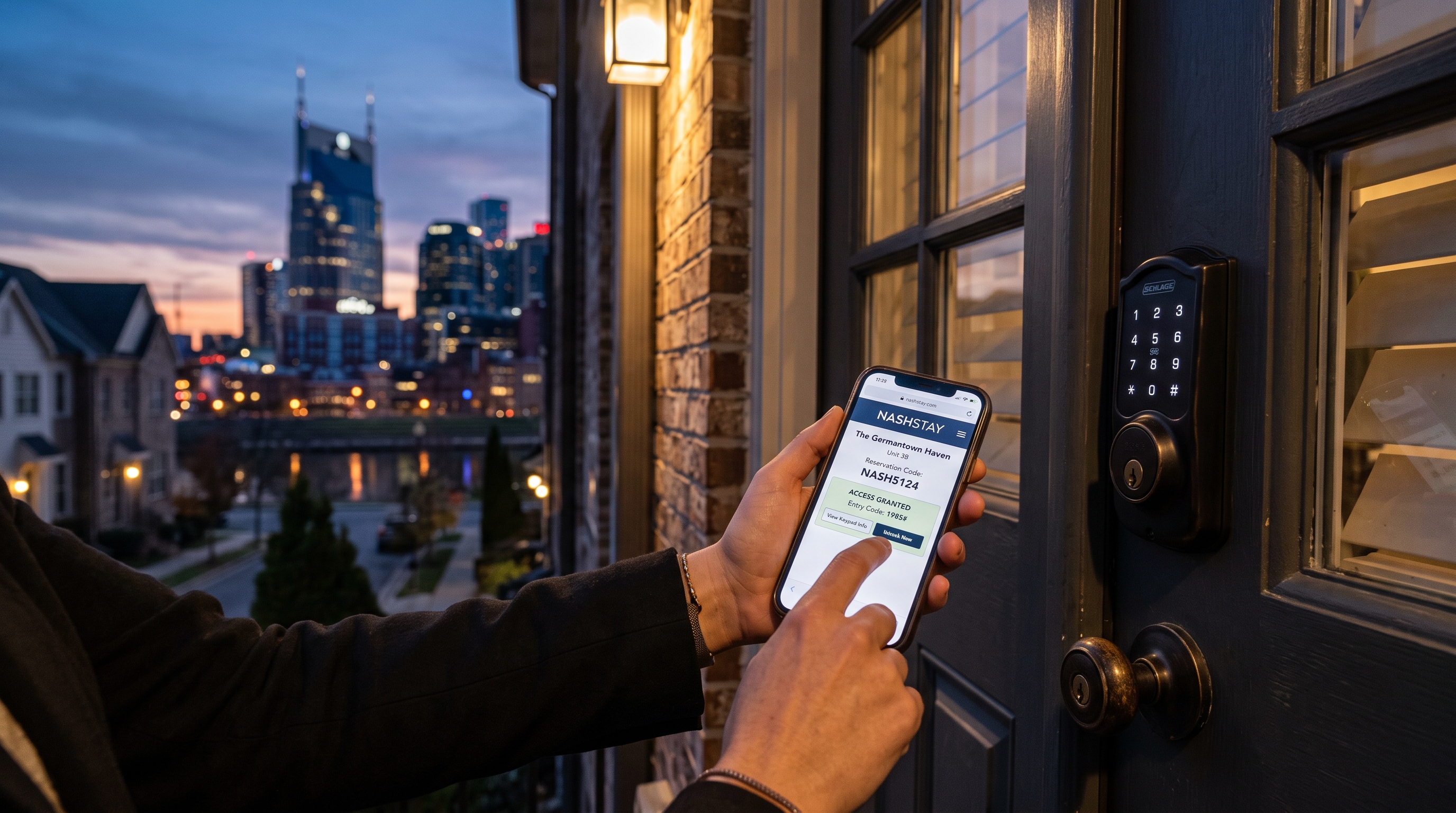
Smart access is your front line. With smart locks for Nashville vacation rentals, you avoid key handoffs, block unauthorized early arrivals, and capture an entry log that aligns to the reservation. The right setup assigns a unique code per booking, starts it at check-in time, and shuts it off at checkout. Pair this with guest ID collection to match the code to a verified name, not a random number a friend can share.
Code hygiene that keeps you out of trouble
- Create codes from the last four digits of the verified guest phone, not from dates or address numbers that are easy to guess.
- Auto-rotate cleaner codes daily and limit them to a 9 a.m. to 7 p.m. window. Do not reuse vendor codes across properties.
- Lock schedules should respect quiet hours. If a noise alert escalates, you can temporarily pause amenity access, such as rooftop decks, through a scene or secondary lock.
Enforce occupancy without confrontations
Send a pre-arrival reminder that includes the max overnight occupancy and quiet hours. On arrival, the lock code text reiterates the rules. If headcount is a concern, a simple photo of government ID for the primary guest plus a short form that lists all adults helps align expectations. Your goal is clear written rules and an access log that shows you did your part.
Automating the 7% Hotel Occupancy Tax Workflow
Metro’s hotel occupancy tax is 7 percent of gross rental receipts plus a $2.50 nightly fee per unit, effective July 1, 2023, per local market data summarized by StaySTRA. Some channels may collect part of this for you, but do not assume full coverage. Build an automated tax compliance Nashville STR workflow that calculates every component, reconciles payouts by channel, and stores a PDF of each remittance receipt in your PMS files.
A monthly, no-drama workflow
- Pull a PMS report for taxable gross receipts by listing and by channel. Include fees the guest paid that are taxable locally.
- Apply the 7 percent rate and add the $2.50 per night fee. Verify that marketplace collections, if any, are netted properly.
- Cross-check against bank deposits and OTA statements. Variance tolerance should be under 1 percent.
- Submit payment and save the confirmation PDF to the reservation month folder. Make it searchable by listing code and date.
Annual fees and renewal safety nets
Create a repeating renewal task for the $313 STRP fee per unit, a 60, 30, and 7 day reminder cadence, and store proof of payment in the property’s compliance folder. If ownership changes are on the horizon, spin up a pre-sale checklist with zoning verification, tax clearance, and a letter that explains permit non-transfer rules so no one assumes a Type 2 will carry over.
Want to see what your property could earn? Use our free Nashville STR Revenue Calculator to get a personalized forecast.
AI Chatbots for Nashville STRs: 24/7 Guest Messaging Without Manual Work
Same-day bookings are common on event weekends and during shoulder periods, so speed matters. Well trained AI chatbots for Nashville Airbnb hosts answer lead questions in seconds, quote the right house rules, and push guests to complete ID and payment quickly. The best setups read your PMS data to personalize arrival times, parking details, and Wi-Fi info, and they escalate to a human when they detect a complaint or safety keyword.
How to set chat up for conversions, not chaos
- Build a knowledge base that mirrors what front-line staff actually say, including neighborhood-specific parking rules and quiet hours.
- Trigger a pre-arrival message 24 hours before check-in that includes code timing and a one-tap contact method for urgent needs.
- Give the bot context for events. During CMA Fest week or a Titans home game, the bot should suggest alternative routes and rideshare zones to cut friction that leads to poor reviews.
Noise Monitoring: Catching Problems Before Neighbors Do
Noise is the fastest path to neighbor complaints and permit headaches, especially in townhome clusters in The Nations, Germantown, and Wedgewood-Houston. The right Nashville STR noise monitoring automation never records speech, it only measures decibels and duration. The playbook is simple, set a quiet hours threshold, alert the guest politely, escalate if needed, and document every step to the reservation file.
Escalation that stays calm but firm
- First alert, automated text at threshold for five minutes. Friendly tone, include the exact quiet hours from your house rules.
- Second alert, human text plus a phone call if it continues for ten minutes. Offer a specific action, such as moving the gathering inside.
- Final step, onsite security or code suspension for amenities if the issue persists. Log everything. That file can save a permit hearing.
The Core Tools: PMS, Channel Managers, and Dynamic Pricing for Nashville Owners
A modern PMS is the hub that makes everything else work. When you evaluate the best PMS for Nashville short-term rentals, look for built-in permit fields, tax itemization, direct integrations for locks and noise sensors, and APIs for pricing and chat. Channel managers should push to Airbnb and Vrbo, but also to Google Vacation Rentals, Hopper, and Whimstay to capture different demand pockets during slow months.
Dynamic pricing that fits 2026 booking behavior
- Protect weekends tied to NFL home games and high-impact concerts with higher floors and longer minimum stays.
- For last-minute demand, taper prices as the stay date approaches. A common rule is a total 8 to 15 percent reduction over the 7 to 14 day window, then 15 to 25 percent if you are 0 to 3 days out, with hard floors that reflect your true variable cost.
- Make floors seasonal and bedroom specific. A 4 bedroom in The Gulch or 12 South should carry a higher last-minute floor than a 1 bedroom in Downtown.
Distribution that addresses the real gap
When a listing underperforms, the issue is often findability, not price. Multi-OTA distribution fills different demand slices, for example a couples getaway that finds you on Google maps, or a budget seeker who trusts Hopper. If your calendar is thin, review this deep dive on booking gaps and calendar fixes, East Side To Gulch, Why Is My Nashville Airbnb Not Getting Booked, then pair those fixes with channel coverage.
For a bigger blueprint on revenue levers and where automation actually moves the needle, see our Nashville Airbnb Investment Playbook 2026 and the broader 2026 Guide to Nashville Vacation Rental Management Success.
How to Integrate Your Nashville STR Automation Stack for Real-Time Data Flow
Think hub and spokes. The PMS is the source of truth for reservations and guest data. Smart locks and noise sensors read from it. The chatbot uses it for context. The tax engine pulls nightly revenue from it. Your reporting tool rolls it all up in daily snapshots. When everything talks to the PMS, you get fewer mismatches and better logs.
KPI dashboards that keep you sharp
- Permit health, renewals due, and any incidents per 1,000 nights.
- Occupancy by lead time, with a focus on 0 to 14 day capture.
- RevPAR by bedroom count and neighborhood, with filters for Germantown, The Nations, and 12 South.
- Tax reconciliation variance and days to remit.
Finally, automate the morning standup. Send a 7 a.m. digest that lists new same-weekend inquiries, tonight’s vacant units that are still above floor, any overnight noise incidents, and cleaners who need access adjustments. That one email is worth real money on busy Saturdays.
Chat and pricing, a high ROI combo
AI chat that sits on your direct site and OTAs will answer fast, but it works best when it has dynamic prices it can pull. If a Friday gap opens for a 3 bedroom in The Nations, your pricing rules should drop to the last-minute floor, and the bot should quote the new price within minutes. This is how you win same-week bookings while staying inside your house rules and permit limits.
Where Misfit’s stack shines
Our team leans into AI-driven pricing, chatbot coverage that converts late leads, and compliance-first workflows. That means documented logs, clean taxes, and less noise risk. When enforcement is active and booking windows are short, that combination is the margin between an average year and a strong one.
FAQ
What should a Nashville STR automation stack cost per month?
Expect $40 to $120 per property per month: a PMS at $20 to $50, dynamic pricing at roughly 1% of revenue or a flat $20, smart locks amortised over a couple of years, and noise monitoring around $10 to $15 a unit. The pricing tool typically pays for everything else.
Are smart locks worth it for a single Nashville property?
Yes, and it is usually the first hardware purchase worth making. Beyond removing key handoffs, codes that auto-expire at checkout end the lingering-guest problem, and per-guest codes tell you exactly who entered and when. Budget $150 to $300 per door for a model that talks to your PMS.
Which automation should a Nashville owner set up first?
Dynamic pricing. It has the clearest revenue effect, takes an afternoon to configure, and keeps working while you build the rest. Smart locks come second, mainly because check-in coordination eats more owner hours than anything else.
Which AI chatbot is best for Nashville Airbnb guest messaging?
Pick a chatbot that reads PMS data, respects quiet hours, and escalates to a human for complaints or safety keywords. It should quote prices using your live dynamic rates, send access info at the right time, and log every message to the reservation. That combination converts last-minute leads without breaking house rules.
What is the best PMS for Nashville short-term rental management in 2026?
Look for direct integrations with smart locks and noise sensors, tax itemization, robust owner statements, and multi-OTA distribution that includes Google Vacation Rentals, Hopper, and Whimstay. You also want custom fields for permit numbers, renewal dates, and HOA rules. The best system is the one that centralizes data and reduces manual exports.
Do noise monitors actually reduce problems, or just record them?
They reduce them, provided the alert triggers a message to the guest rather than only a log entry. Most parties escalate gradually, and a polite text at the first threshold breach resolves the large majority before a neighbor ever calls. A monitor that only records gives you evidence, not prevention.
Can automation replace a property manager?
It closes part of the gap, mostly on pricing and messaging. What it does not cover is the physical side: a backup cleaner when one cancels on a Saturday, a plumber who answers on a holiday weekend, and someone to walk the property when a guest reports something odd. Those are the failures that produce one-star reviews.
If you want a management partner that pairs automation with on-the-ground accountability, we are here to help. Get your free Nashville revenue estimate or Schedule a call to see how this stack would run on your property.